Wednesday, September 30, 2009

HOME AND FAMILY


Do Prenatal Vitamins Do More Harm Than Good?

When I asked my OB what I should do about prenatal vitamins—those revered nutritional supplements—he shocked me by reaching under his desk and pulling out the garbage can.
“Put them in here,” he said.
My doctor’s advice made my jaw drop.
On one hand, that was a huge relief, as the hyperemesis gravidarum (extreme morning sickness) that characterized all my pregnancies prevented me from swallowing almost any pill.
But I thought you were a bad mother if you didn’t take prenatal vitamins. In fact, before I became so ill, I purchased a jug of prenatal vitamins that included every possible herb that might benefit my brand new embryo. Because you’re better safe than sorry, right? Shouldn’t everyone take a multivitamin?
According to my doctor, that’s not right. And he’s not alone. In February, a study published in Archives of Internal Medicine showed that daily multivitamin use doesn’t ward off cancer or heart disease, even though a nutrient-rich diet does.
Charles Lockwood, MD, the chief of obstetrics and gynecology at Yale–New Haven Hospital, confirmed my doctor’s advice: “If you eat a balanced diet and are not iron deficient, it is not clear that prenatal vitamins result in any health benefits during pregnancy.”
My doctor then referred me to Williams Obstetrics, the essential source of information for ob-gyns. In the 17th edition, I discovered this passage:
“The practice of supplying vitamin supplements prenatally is a deeply ingrained habit of many obstetricians, even though scientific evidence to show that the usual vitamin supplements are of benefit to either the mother or her fetus is quite meager.”
Why doesn’t anyone know this? I read on to discover the Committee on Maternal Nutrition of the National Research Council pointed out that pregnancy supplements are of doubtful value, “except for iron and possibly folic acid.”
So we’re not completely off the hook—we still benefit from popping a few pills. But which pills, and how much? That seems to be quite a topic of debate. What does seem certain is that we’re better off taking our vitamins more discriminatingly, if we take them at all.
For example, if we take large doses of vitamin C, we could give our unborn babies scurvy, according to William Obstetrics. And supplementing iodine beyond our usual salt intake can “induce a sizeable goiter in the fetus.” Yikes!
I learned that the pills I should take while pregnant include the iron and folic acid mentioned in Williams Obstetrics, as well as the new darling of nutritional experts, vitamin D.


Sex and Relationships


Dating Dilemmas: 8 Tips for TelliDating someone new means learning about each other’s quirky behaviors, emotional baggage, and the past experiences that have shaped both of your lives. But what if this involves a health or medical secret you’re hesitant to talk about?
Jill*, a 33-year-old from New York City, knows that finding Mr. Right also means telling him that she has bipolar disorder. Though she takes medication to manage her condition, she still lives with residual symptoms: She has trouble sleeping for more than two hours at a time, and can’t shake her cigarette habit—traits that she feels a date might question.
“It’s the smoking and lack of sleeping; it’s hard to share your life with someone when you need to explain further why you do these things,” she says.ng Your Partner a Health SecretJill* knows that she’ll eventually have to confess her situation to a long-term partner. “It’s something that will affect me if and when I settle down and have children, since I would not be able to take these medicines [while pregnant],” she explains. “It’s never an easy thing to come clean with.”
Not every relationship hides a secret like this one, but plenty of people face similar decisions about how much they should tell a new companion. Some confidential information can’t stay that way forever—if you take daily medication or if you have a condition with visible symptoms, for example. Other events in your medical history, such as addictions, mental illness, past surgeries, and health scares, can easily remain a secret—but should they?
If you’re considering telling your partner about a health secret, here are eight tips to help you spill the beans.
1. Practice what to sayBefore you drop a bomb on a potential mate, rehearse your speech with a trusted friend or visit a therapist to talk it through, suggests Ken Robbins, MD, a clinical professor of psychiatry at the University of Wisconsin–Madison.
“It’s good to have somebody as a sounding board in a situation like this,” he says. “How you handle this is not something your partner is likely to forget.”
Laurie Davis, an online dating expert based in New York and Boston, suggests asking a friend what sounds most intimidating about your condition and getting his or her advice on how to smooth it over. Getting a second opinion can help you decide how much to say (and when and where to say it), and running through your script a few times can make you more comfortable sharing your story.
“You don’t want to overwhelm your partner but you want to be sure to give him or her all of the important facts,” Davis says. “You should definitely practice before you tell your match, or you’ll most likely fumble through the conversation uncomfortably.”
Mark Snyder, a 32-year-old writer from New York City, used to dread telling a new boyfriend that he was a recovering alcoholic. “I don’t think I was ever able to shake off the feeling I was springing the information on him, usually when we were either out to dinner and he wanted to order a bottle of wine, or at a party where alcohol was introduced,” he says. “I often blurted out, ‘Oh, I don’t drink. Sorry.’”
That changed, however, as he got used to talking about his condition. “As time went on, and I got more comfortable with this side of my life, so did the ease with which I told a man not to expect a tequila-scented smooch at the end of the night,” he says. “I realize my blurting-it-out style was my own insecurities about sobriety. I celebrate it

Skin & body strategies


Add back the glowThe real trick to a youthful complexion is exfoliation. “As you age, cell turnover slows, and removing the top layer of dead skin cells reveals the younger-looking skin beneath,” explains Jeannette Graf, MD, assis­tant clinical professor of dermatology at Mt. Sinai School of Medicine in New York City.
Makeup artist Carol Shaw sees other postexfoliation benefits—“It lessens the look of lines and helps makeup glide on smoothly,” she says. An exfoliator we like: Olay Regenerist Micro-derm Cleansing Cloths ($7.99).
Keep your hands young“Your hands can reveal your age even when your face doesn’t,” says Spirit Demerson, an organic-beauty expert. Keep them gorgeous with a cream that contains sunscreen and ingredients to improve texture; try Ole Henriksen Hands Forward SPF 15 ($28).
Surprisingly, the skin on your hands isn’t the only age giveaway. Several experts noted that certain nail looks can add years. For the freshest manicure, file nails to a short, softly rounded shape and paint on a pale-pink polish. Also, avoid frosts and superlong nails, which can be aging, Demerson says.
Go to the prosDermatologists have a ton of ways to take off the years—and many are less expensive and less invasive than you might think. For example, “Prescription-strength retinoids are proven to boost collagen production and diminish wrinkles,” according to Beverly Hills dermatologist Ilya Reyter, MD.
And studies have shown that retinoids can also help fade the spots that appear as you get older. Best of all? A prescription often costs less than creams that simply cover or conceal fine lines.
Next: Makeup musts

Skin and Anti-Aging


The Best Spray SunscreSummer may quickly be coming to a close, but that doesn’t give you an excuse to slack on your sunscreen routine. Long weekend afternoons spent at the soccer field or working in the yard still put you at risk for sun damage. After all, skin cancer is the most common cancer in the United States, with more than 68,000 cases of melanoma diagnosed each year. Need another reason to slather on some sunscreen?
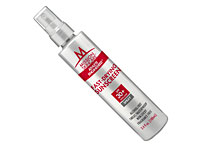
I may be diligent about applying it in the hot summer sun, but once the temperature starts to fall, there goes my sunscreen routine. Who likes smelling like the stuff once the season has passed? Not me. That’s why I love Mission Skincare’s fragrance-free formulas. Although I normally shy away from sprays—I always wind up with sunburn blotches—I swooned over Mission’s Fast-Drying Sunscreen 30+ Spray ($10; missionskincare.com). It’s quick, easy, and non-greasy, so I don’t wind up sticking to my clothes.
I plan on toting a bottle in my purse every weekend this fall. Mission is endorsed by top athletes like Serena Williams, Sergio Garcia, and Mia Hamm, so while I may be more of a sideliner than an all-star on the soccer field, I can at least feel like a skin-care pro.
Related stories:
Is It a Mole or Skin Cancer?
The Right Moisturizer for Smooth Skin in Your 30s, 40s, 50s
Natural Ways to Get Gorgeous
Last Updated: September 8, 2009Filed Under: Sun ProtectionAlso Tagged: , , , , , , en Ever

Stressed? Crazy Busy? Help Is Here


: How can I keep my stress from spilling over to my kids? I find myself losing my temper more lately.
A: Congratulations for noticing and wanting to stop the cycle. Try doing what I call “issuing a storm warning”—alert your kids when you sense that you’re about to lose your patience. This gives them time to alter their behavior, and it’s useful for you, too: Hearing yourself say out loud that you’re at the end of your rope creates awareness.
And the more you’re tuned in to the stress you’re feeling, the better you’re able to interrupt the anger cycle. How do you do that? Take three or four deep breaths and relax all of your muscles as much as possible. This is highly effective because you can’t be stressed and relaxed simultaneouslyIf that doesn’t work, announce that you’re leaving the room and will return when you’re calm. It usually takes 30 minutes for stress hormones to leave your body once you’ve lost your temper and the fight-or-flight mechanism has fully kicked in. But even a few minutes alone can help you short-circuit a blowup and prevent you from doing or saying things you’ll later regret. If you curb your anger once, you will feel confident that you can do it again in the future. And having that control will greatly ease your overall stress level, making you less likely to erupt.
Q: I get so freaked out when I think of all the work I have to do that I end up doing nothing at all, and then I feel even worse. How do I break the cycle?
A: Try using tunnel vision. What’s hard about your situation is that you’re looking at all the things you have to do—clean the messy kitchen, write that overdue report, read all 200 e-mails crowding your in-box—as a whole. This, of course, feels overwhelming. Instead, start small. Ask yourself, “What’s one thing I can do right now?”
The more stressed you feel, the smaller the thing should be. It doesn’t matter which part of your to-do list you tackle first—one drawer, one pile, one phone call. Just do it. When you finish, ask yourself the same question again.
I learned how to do this while writing my new book AdaptAbility: How to Survive Change You Didn’t Ask For on a very tight deadline. If I focused on the fact that I had to write an entire book in eight weeks, I’d just panic.
Instead, I told myself I had to write an essay a day, which I easily did. This technique has a name: kaizen. It’s a Japanese management approach that has led to Toyota being the number-one car company in the world. It helped me—and it can help you, too.

Kids on the Run: The New Trend in Family-Friendly Fitness


I was in my 20s before I discovered running, so I’m always amazed to see young children keeping up (or passing me by) when I’m out for a jog. When I was a kid, no one ran as a sport itself; rather, we played basketball, softball, or soccer. Running laps is what you did—reluctantly—to be better conditioned for the games.
But in the last decade, there’s been a boom in children running races that were once strictly for adults. Kids as young as 5 and 6 are running with school groups, and tweens and teens are entering 5- and 10-kilometer races—and even mini-triathlons—with their parents, running clubs, and even on their own.
Active.com, an online source for races around the country, lists more than 230 running events for kids and more than 30 for families in the month of September alone.
Getting kids outside and active is obviously a good thing. We live in a society where childhood obesity is at an all-time high and studies suggest too much television time may contribute to behavior problems, poor grades, and even depression later in life.
But are the physical and mental demands of long-distance running safe for children? At what age is competition appropriate, and what do parents need to keep in mind?
Increase kids’ distance with ageMark Halstead, MD, a pediatric sports medicine specialist at Washington University, in St. Louis, has been a distance runner for most of his adult life. His wife is also an avid runner, so it’s no surprise that their 6-year-old son is already out pounding the pavement as well.
More about running:
Join the Girls Gotta Move Club
Best Foods for Runners
Prevent Injuries With ChiWalking
Time.com: For Triathlons, How Young is Too Young?
In fact, Dr. Halstead’s son completed a marathon earlier this year—although it took him nine months to do so. This marathon was broken down into half-mile intervals run over the course of nine months. It was part of a school program called Read, Right, and Run, which encourages kids to also read 26 books and perform 26 good deeds during their “marathon.”
Dr. Halstead fully supports these types of organized events, assuming that parents take common-sense precautions and monitor their child’s well-being as they train.
“The distances set up for these races are generally very appropriate for kids; they’re distances they would typically spend running around in the yard with friends,” he says.
Usually children are ready to start running longer distances—5 kilometer (5K) races, for example—between ages 8 and 10, says Dr. Halstead. However, a child’s individual rate of development and desire to run matters more than his or her actual age.

Healthy Cooking on the Cheap: Spinach Turkey Burgers, Mediterranean Stuffed Peppers, and More


HGrocery lists and easy weeknight recipes from a culinary pro.ealthy Cooking on the Cheap: Spinach Turkey Burgers, Mediterranean Stuffed Peppers, and MoreI love the grocery store. OK, I am a bit obsessed with it, actually. I would pick grocery shopping over clothes shopping any day of the week! But, like most Americans, I’m on a tight budget these days, so I need to buy the healthiest groceries for the least amount of money. I may have temporarily banned myself from shopping in heaven—I mean Whole Foods—but eating well doesn’t have to cost you.
The best way to eat healthy on a budget? Meal planning. I dream up two or three dinners I want to make the upcoming week, write down the ingredients, and then buy only those. And I usually break my grocery shopping down into a couple of trips. I do mini-shops every week, then once a month I buy in bulk at Costco. I look for produce that won’t perish, like apples, and I score some great deals on frozen veggie burgers and peanut and almond butter. And I stock up on frozen broccoli and corn, too. Check out these time- and money-saving freezer tips. Buying seasonal produce is another great way to score a deal.
Every two weeks I’ll set you up with a grocery list and some quick and easy family dinner ideas that can double as leftovers for lunch the next day. This week I’m focusing on fresh fall produce—specifically sweet potatoes and Brussels sprouts. Back-to-school season, college football, and apple picking—what’s not to love about fall? Even though the temperatures are still in the upper 90s here in Florida, now that it’s September I can start using some of my favorite autumn ingredients.
Here’s what’s on the list this week:
Large, raw frozen shrimp (I love Kirkland, Costco’s brand. They’re a great bargain!)
Whole-wheat angel hair pasta (Barilla makes a 51% whole-grain blend that kids will love.)
2 cans diced tomatoes
Feta cheese
Extra virgin olive oil
Dry white whine (any Chardonnay will do)
Garlic cloves
2 lemons
2 containers extra-firm tofu (I love Nasoya brand.)
Sesame oil
Tamari (Find this next to the soy sauce in your local supermarket.)
Garlic powder
Whole-wheat pitas
Sea salt
Rice wine vinegar
4 sweet potatoes
Brussels sprouts
Light mayonnaise
Creole seasoning
Whole-wheat hoagie rolls
Relish
Hot sauce
Quinoa
4 large red bell peppers
Fresh basil
Eggs
1 lb. lean ground turkey
10 oz. frozen spinach
Organic lettuce Spinach Turkey BurgersCombine ground turkey with 1 egg, sea salt, and pepper, and mix well. Add defrosted frozen spinach and form mixture into four evenly sized patties. Cook each patty for about 6–7 minutes on each side or until cooked through. Serve on whole-wheat buns or hoagie rolls with lettuce, ketchup, and mustard.
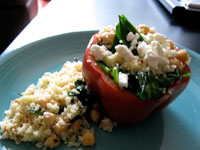
Mediterranean Stuffed Bell PeppersGently cut the tops off of four large red bell peppers. Set aside. In a medium-size pot, bring 1 cup quinoa, a pinch of sea salt, and 3 cups water to a boil. Once boiling, reduce heat to low, cover and let cook for about 12–13 minutes or until the quinoa has soaked up all the water and is light and fluffy. Remove from heat. Add 1 can drained diced tomatoes, 1/2 cup feta cheese crumbles, 1/4 cup chiffonaded (or roughly chopped) fresh basil to the quinoa and gently stir. Stuff each bell pepper with quinoa mixture and serve with a large salad and warmed whole-wheat pitas.
Baked TofuDrain tofu and set each block on separate plates. Cover with dish clothes and heavy books and let “press” for 30–40 minutes. Remove books and towels and slice each block of tofu into four pieces. In a small bowl combine 2 tablespoons of sesame oil, 2 teaspoons of rice wine vinegar, 1 tablespoon of tamari, a pinch of sea salt, a pinch of cayenne, and 1 teaspoon of garlic powder. Rub each tofu slice with the mixture and bake for 30 minutes at 400º, turning each slice after 15 minutes. Serve alongside baked sweet potatoes and Brussels sprouts.
Shrimp Scampi PastaThaw bag of frozen shrimp. Peel and devein. Set a large pot of salted water on the stove to boil. In a large skillet, heat about 2 tablespoons of extra virgin olive oil on medium high. Add 3 garlic cloves, minced, and sauté for about 1 minute or until fragrant. Add 1/4 cup dry white wine and the juice of 1 lemon and bring to a simmer for about 4 minutes. Add shrimp and toss well. Cook for about 5 minutes, or until shrimp are cooked through. Watch out—they cook quickly! Meanwhile, cook the whole-wheat angel hair in the boiling water and drain. Add the hot, cooked pasta to the shrimp mixture and toss. Season with sea salt, pepper, and grated Parmesan cheese.

Fish Oil Supports Heart Health


When it comes to heart health, there is one fat that won’t work against you—fish oil. While most of us need more fish in our diets, heart experts recommend that people at risk for or with coronary artery disease should consume about one gram of fish oil per day. That’s the same amount in three ounces of wild salmon (farmed fish may have less heart-healthy fats than wild).
Healthy people should aim for 500 milligrams a day, according to James O’Keefe, MD, a cardiologist with the Mid-America Heart Institute in Bethesda, Md.
Research suggests that omega-3 fatty acids, found in fish and fish oil as well as some plant foods, can decrease the likelihood of cardiovascular disease.
Eating at least one fish meal a week was associated with a 52% reduction of risk for sudden cardiac death, according to a 1998 study of over 20,000 U.S. male physicians. Specifically, it can help prevent arrhythmias, lower triglycerides (a type of fat in the blood), slow down the buildup of plaque in the arteries, and slightly lower blood pressure.
Nutritionists recommend taking a food-based approach to fish oil before turning to capsule supplements, because fish is also a good source of protein and other nutrients.
Joyce Baber, 54, from New Egypt, N.J., is trying to do just that to help lower her high cholesterol, 233 (LDL, 174; HDL, 59) and slightly elevated blood pressure.
“My doctor recommended omega-3,” she says. “My LDL should be 130 or less and my HDL should be closer to 100.” Patients with high cholesterol patients who consumed EPA, an omega-3 fatty acid, daily showed a 19% decrease in non-fatal coronary events, including heart attack, according to a 2007 Japanese study of over 18,000 peopleHow much fish should you eat? People with a history of cardiovascular disease should eat fatty fish, such as mackerel, trout, herring, sardines, albacore tuna, and salmon, two to three times per week. Those without a history of heart disease are advised to eat fish at least one to two times per week.
Pregnant women should consume two fatty fish meals a week, while avoiding shark, tile fish, king mackerel and swordfish, which may contain some environmental contaminants such as mercury, according to the FDA.
Eat with your mind as well as your mouth, and pay close to attention to how the fish is prepared. Fried fish and fish from fast food restaurants do not offer the same heart health benefits as baked and broiled fish. Tofu and other forms of soybeans, canola, walnuts and flaxseeds, and their oils, are also rich sources of alpha-linolenic acid, which is converted to omega-3 fatty acid in the body. Omega-3-enriched eggs are also available in supermarkets.
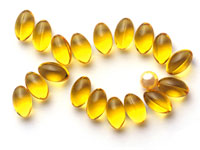
Fish versus fish supplements While the American Heart Association recommends oily fish as the preferred source of omega-3 fatty acids, supplements are a convenient source for people who don’t like fish or are unable to consume the advised dosage. Side effects from the supplements are uncommon, but some report a fishy aftertaste, nausea, bloating and belching. (Try storing the supplements in the freezer to minimize the taste.)
Baber admits she has not started taking the fish oil capsules, which her doctor recommended, because she has a hard time swallowing them.
“I am not good at swallowing large pills and I’m looking for ones that are a reasonable size. I also have acid reflux and I know there are possible GI side effects. But I will give this a try because I would like to avoid taking a statin drug, if possible.”
Rene Colwell, 50, of New York City, says “fish burps” turned her off to supplements after her 2006 heart attack, but she tries to take at least half of the four capsules her doctor recommended.
“Research actually supports combination therapy of omega-3 supplements and medication for people at risk for heart disease,” says Dr. O’Keefe. Fish oil and statins are a safe and effective way to improve cardiovascular health—more so than the use of statins alone, he says.

Federal report says preservative in vaccine may be linked to disease


vaccine preservative may have contributed to a case of autism, the federal government conceded after years of denying a link. In its written concession statement, the government said the child had a pre-existing mitochondria disorder that was "aggravated" by her shots, resulting in an autism spectrum disorder (ASD) diagnosis. Mitochondria are the powerhouses of the cell, converting oxygen and food into energy for every life function. The news site Huffington Post at www.huffingtonpost.com reported in November that federal officials had confirmed the link to thimerosal Nov. 9. The government then sealed records of its statement, the Web site reported. "The vaccinations received on July 19, 2000, significantly aggravated an underlying mitochondrial disorder, which predisposed [the child] to deficits in cellular energy metabolism, and manifested as a regressive encephalopathy [brain disease] with features of ASD," the concession obtained by Huffington Post states. Mitochondrial disorders are rare, affecting one in every 2,000 to 4,000 people, according to the United Mitochondrial Disease Foundation. Symptoms include lethargy, poor coordination and problems eating or digesting food. However, the number of children with autism affected by mitochondrial disorders is around one in five. With 4,900 thimerosal cases pending in the federal courts, a distinct connection among thimerosal, mitochondrial disorders and autism would have far-reaching implications. Most vaccines today do not use thimerosal as a preservative, according to a survey by the Johns Hopkins Bloomberg School of Public Health in Baltimore City. The exceptions include large-batch adult flu vaccines made by some manufacturers. Autism spectrum disorders are a group of developmental disabilities marked by impaired social interaction and communication and the presence of unusual behaviors and interests, according to the Centers for Disease Control and Prevention. Many people with ASDs also have unusual ways of learning, paying attention or reacting to different sensations. In about 10 percent of cases, genetics are a factor, said Dr. Harvey Singer, director of pediatric neurology at Hopkins Children's Hospital in Baltimore City, but the rest remain a mystery.

CFHI SCHOLARSHIPS


Updated 8/19/2009: CFHI is pleased to announce we are now accepting applications for Spring 2010 Scholarships to provide partial funding towards January- May 2010 CFHI global health education programs only. See below for details and scholarship application link.
--
/* Font Definitions */
@font-face
{font-family:"Trebuchet MS";
panose-1:2 11 6 3 2 2 2 2 2 4;
mso-font-charset:0;
mso-generic-font-family:swiss;
mso-font-pitch:variable;
mso-font-signature:647 0 0 0 159 0;}
/* Style Definitions */
p.MsoNormal, li.MsoNormal, div.MsoNormal
{mso-style-parent:"";
margin:0in;
margin-bottom:.0001pt;
mso-pagination:widow-orphan;
font-size:12.0pt;
font-family:"Times New Roman";
mso-fareast-font-family:"Times New Roman";}
a:link, span.MsoHyperlink
{color:blue;
text-decoration:underline;
text-underline:single;}
a:visited, span.MsoHyperlinkFollowed
{color:purple;
text-decoration:underline;
text-underline:single;}
p
{mso-margin-top-alt:auto;
margin-right:0in;
mso-margin-bottom-alt:auto;
margin-left:0in;
mso-pagination:widow-orphan;
font-size:12.0pt;
font-family:"Times New Roman";
mso-fareast-font-family:"Times New Roman";}
@page Section1
{size:8.5in 11.0in;
margin:1.0in 1.25in 1.0in 1.25in;
mso-header-margin:.5in;
mso-footer-margin:.5in;
mso-paper-source:0;}
div.Section1
{page:Section1;}
-->


What Are CFHI Spring 2010 Scholarships?
Child Family Health International (CFHI) offers partial scholarships for use towards CFHI program fees. Scholarships are currently available for the following program months only: Spring 2010- January,February, March, April, May. Recipients of scholarships are responsible for the remaining balance of CFHI program fees. All recipients are responsible for their own airfare.
CFHI is happy to announce it will be offering 10 partial scholarships for spring 2010 programs. Five (5) partial scholarships in the amount of US $500 may be awarded towards participation in any CFHI global health education program, in addition five (5) partial scholarships in the amount of US $500 are set aside specifically for CFHI global health education programs in South Africa.
Who Can Apply?
CFHI is committed to working globally and addressing inequities. In line with this global lens, it is the policy of CFHI to actively seek a diverse pool of candidates from a variety of backgrounds who are committed to the mission and vision of CFHI. Scholarships will be given to students who demonstrate a commitment to their communities as well as financial need and an interest in exchanging ideas and sharing experiences with people in Bolivia, Ecuador, India, Mexico and South Africa. Priority will be given to people of ethnicities under-represented in CFHI programs, as well as those who have had limited opportunity to travel abroad. All interested in attending a CFHI program during Spring 2010 and who are financially able to pay the remaining program fees (~US$1500) along with their own airfare are encouraged to apply. The deadline for submitting the CFHI Scholarship application is November 15, 2009.
Scholarship Recipient Requirements:
Recipients of CFHI scholarships will be required to pay their own airfare, the balance of their CFHI program fees, and any personal expenses as outlined on the program description pages. Recipients must keep a clinical and cultural immersion journal to be used as part of their scholarship report submitted at the end of their program. They must take photographs while abroad that may be used on the CFHI website and in CFHI publications and materials.Recipients may also be required to write an article about their experience for CFHI newsletters or other publications. They must also be willing to report their perspective on diversity in the host country with particular focus in medical and social contexts. CFHI will ask recipients to act as Campus Representatives or Alumni Ambassadors for prospective CFHI participants, and may be asked to attend study abroad fairs in their local area.

Chagas in Southern Bolivia


CFHI’s Chagas program in Tarija, Bolivia provides students an opportunity to learn about an infectious disease that is a major cause of death and disability in Latin America, but which is very rarely seen in industrialized countries. According to the CDC, an estimated 8 to 11 million people in Mexico, Central America, and South America are currently infected with Chagas. It is an infection which is often symptom-free and can be life-threatening if left untreated. Students will participate in prevention and epidemiological programs as well as clinical rotations where they will observe the various manifestations and stages of Chagas infection.
Chagas is an endemic disease in Bolivia, with Tarija having one of the highest prevalence rates in the whole country. The vector that transmits chagas, called a Vinchuca, is a large, beetle-like insect which lives in roof thatching and unfinished walls common in rural and impoverished communities, and is present in 90% of the territory of Tarija. Usually considered a disease of poverty, Chagas affects approximately 70% of the population, causing miscarriages, premature births and low birth weight of children with mothers suffering from this disease. Chagas also produces visceromegalis in the digestive tube and cardiopathy, which can be deadly in many cases. This disease, usually found only in countries with scarce resources, is not well known or studied in developed countries, but due to international migration and population shifts, it has recently been detected in areas where it was previously non-existent.
The health department of Tarija has an infant mortality rate of 53 per thousand births, the most frequent causes of death are preventable diseases. The prevalent pathologies in the area are Chagas or American Tripanosomiasis, malaria and tuberculosis. In more rural areas of Tarija like Yacuiba and Bermejo, dengue and hanta virus cases have also been detected.
CFHI programs offer participants the opportunity to learn more about health issues that transcend national borders, class, ethnicity, and cultural divisions. By participating in CFHI’s global health education you will gain a unique insight into healthcare systems of developing countries and increase your cultural competency. Increasing one's awareness of other cultures (cultural competency) is becoming increasingly relevant for healthcare professionals as industrialized countries become more ethnically, culturally and linguistically diverse

CFHI Program Spotlight: Sight for All


Introduction
One of CFHI's newest programs, Sight for all- Ophthalmology Rotation, is unique in that it is based out of just one organization- a local NGO located in New Delhi, India.

Description
CFHI participants rotate through the various departments, learning how programs and treatment are implemented to reduce preventable visual handicaps. Participants are exposed to mobile eye care clinics, ophthalmic procedures in the operating theater, and take part in advanced level classes at the institute.